
There’s a moment every noise cancelling headphone enthusiast knows well. You slip on a great pair of cans, press play, and suddenly the rest of the world just… disappears. Traffic, office chatter, crying babies on a flight gone. That’s the promise of a truly great pair of headphones, and in 2026, it’s easier than ever to find one that delivers.
But here’s the catch: the market is more crowded than it’s ever been. Walk into any electronics store or scroll through Amazon and you’ll find hundreds of options ranging from $30 disposables to $500-plus flagship models. Knowing which ones are genuinely worth your money and which ones just look impressive on paper takes real-world testing and honest evaluation.
That’s exactly what this guide is for.
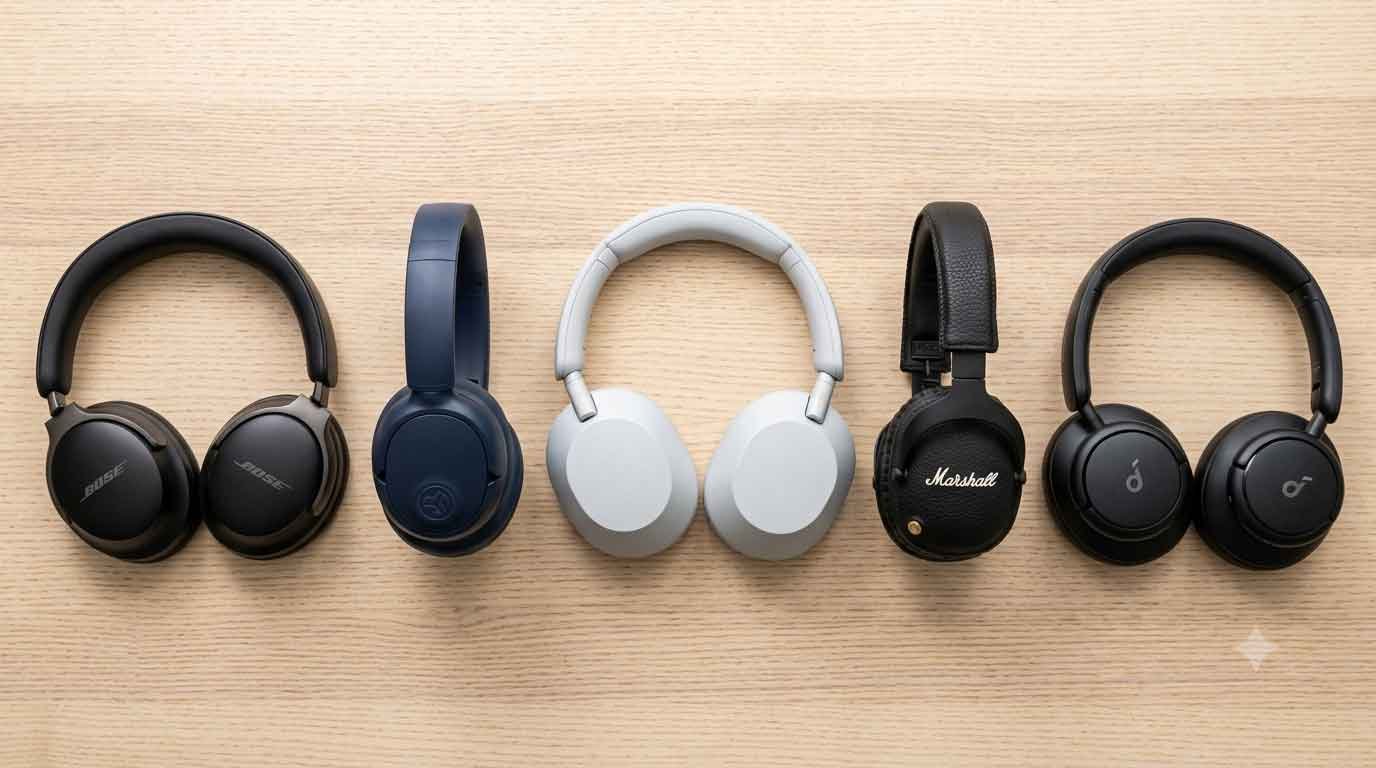
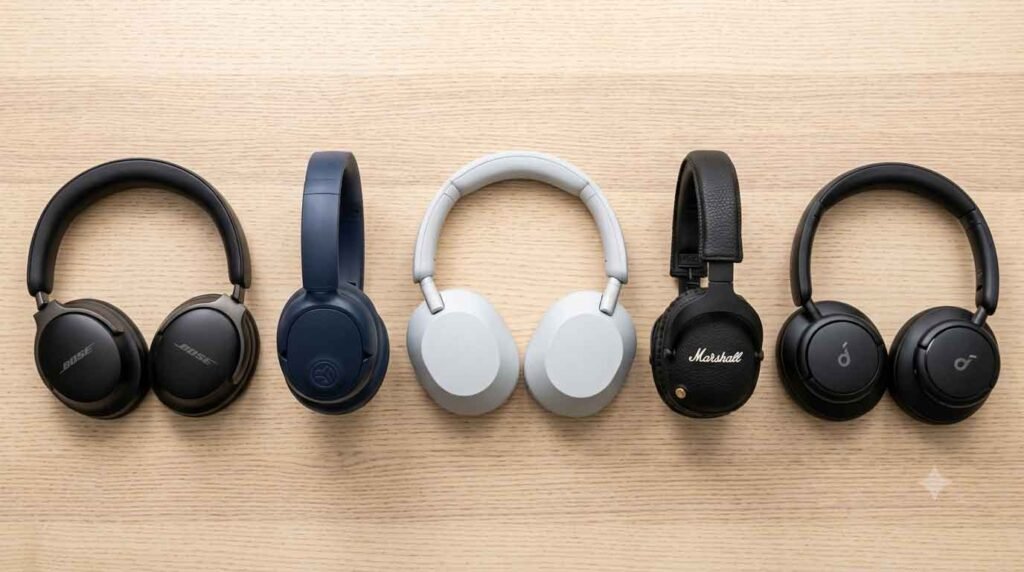
We’ve dug deep into five carefully selected models covering every price range from budget-friendly to mid-range to premium. Whether you’re a daily commuter looking for peace and quiet, a music lover chasing audiophile-grade sound, a remote worker who needs crystal-clear call quality, or just someone who wants a reliable all-day companion, there’s something here for you.
Let’s get into it.
Why Great Headphones Are Worth the Investment
A decent pair of wired earbuds from the discount bin technically plays audio. So why would you spend $200, $350, or $450 on a pair of over-ear wireless headphones?
The short answer: because the experience is dramatically different.
Premium headphones offer deeper soundstages, tighter bass, clearer mids, and more natural treble reproduction. Active noise cancellation technology has matured enormously over the past few years, to the point where flagship models can block almost all low-frequency rumble from airplane engines, trains, and open offices. Comfort engineering has improved too the best models today can be worn for eight-plus hours without any pressure points or fatigue.
Then there’s call quality, app customization, multipoint Bluetooth pairing, fast charging, and firmware updates that keep the headphones improving over time.
When you add it all up, a $350 pair of headphones used daily for two years works out to less than $0.50 a day. That’s a pretty reasonable price for dramatically better audio and focus throughout your workday and commute.
Types of Noise cancelling Headphones: Which Style Is Right for You?
Before we get into specific recommendations, it’s worth clarifying the main categories:
Over-ear headphones the focus of this guide have earcups that completely surround your ears. They tend to offer the best sound quality, most effective ANC, and longest battery life, but they’re bulkier than other styles.
On-ear headphones sit on top of your ears rather than around them. They’re more compact, but can create more pressure and typically offer less isolation.
In-ear monitors (IEMs) and earbuds are small, portable, and discreet, but usually can’t match the soundstage and depth of a full-sized over-ear pair.
True wireless earbuds are completely cable-free and great for commuting or exercise, but battery life per charge tends to be limited.
This guide focuses exclusively on over-ear wireless headphones the format that consistently offers the best balance of audio quality, comfort, ANC performance, and everyday versatility.
Quick Comparison Table
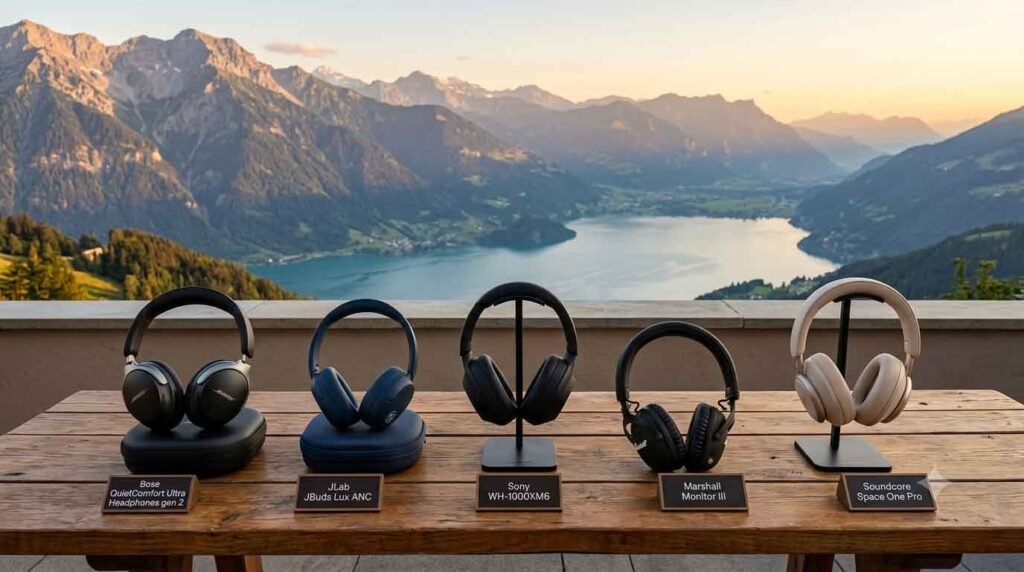
| Headphone | Best For | Sound Quality | Comfort | Battery (ANC On) | ANC | Weight | Price Category | Our Rating |
|---|---|---|---|---|---|---|---|---|
| Bose QC Ultra Gen 2 | Travel & ANC | ★★★★½ | ★★★★★ | 30 hrs | ★★★★★ | ~250g | Premium ($449) | 9.4/10 |
| Sony WH-1000XM6 | Work & Music | ★★★★★ | ★★★★ | 30 hrs | ★★★★★ | ~254g | Premium ($449) | 9.3/10 |
| Marshall Monitor III | Music & Style | ★★★★ | ★★★★½ | 70 hrs | ★★★½ | ~250g | Mid-Premium ($349) | 8.8/10 |
| Soundcore Space One Pro | Mid-Range Value | ★★★★ | ★★★★ | 55 hrs | ★★★★ | ~260g | Mid-Range ($199) | 8.5/10 |
| JLab JBuds Lux ANC | Budget Pick | ★★★ | ★★★½ | 40 hrs | ★★★ | ~235g | Budget ($79) | 7.8/10 |
What to Look for Before Buying Headphones
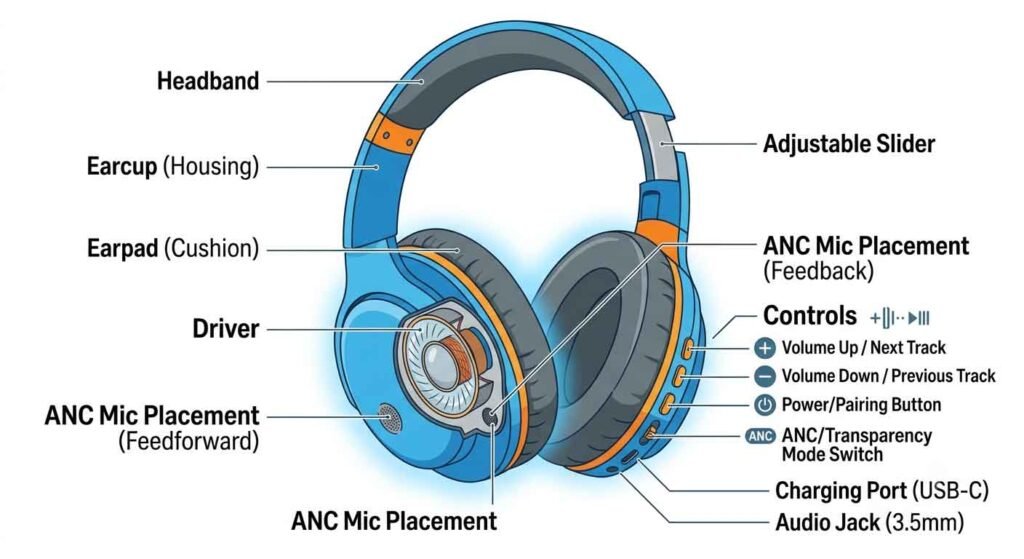
With so many specs being thrown around, it can feel overwhelming. Here’s a plain-English breakdown of what actually matters and what to look for in each category.
Sound Quality
This is the big one. Sound quality depends on the driver technology, tuning, and your personal preference. Most consumer headphones lean toward a “V-shaped” sound signature with boosted bass and treble and a slightly recessed midrange this tends to sound exciting and fun, especially for pop, hip-hop, and EDM. Audiophiles and musicians often prefer a more neutral, “flat” signature that accurately reproduces recordings without coloring the sound.
The good news is most modern flagship headphones come with companion apps that let you customize the EQ to your taste.
Driver Size and Technology
Most wireless headphones use dynamic (moving coil) drivers. Larger drivers typically 40mm can move more air and tend to offer better low-end extension. Some premium models use planar magnetic or balanced armature drivers for more accurate reproduction, but these are less common in over-ear consumer headphones.
Bass Performance
Bass quality isn’t just about quantity. Good bass is punchy, tight, and extends low without becoming muddy or overwhelming other frequencies. If you love deep bass, check reviews that specifically call out sub-bass extension (the really deep rumble below 60Hz). If you want accuracy, look for headphones described as “neutral” or with good “bass control.”
Midrange Clarity
The mids are where vocals and most acoustic instruments live. Recessed mids can make music sound thin, while overly boosted mids can sound harsh or nasal. Clarity in the 500Hz–3kHz range is essential for spoken word, podcasts, and most acoustic music.
Treble Detail
Treble (high frequencies) adds air, sparkle, and detail to music. Too much treble and the headphones become fatiguing or harsh; too little and everything sounds dull and muffled. A well-tuned treble response extends smoothly to around 16–20kHz without sharp peaks.
Soundstage and Imaging
Soundstage refers to how spacious and three-dimensional the audio feels. Wide soundstage headphones create the impression that instruments and voices are positioned around you, rather than sitting directly inside your head. Imaging refers to how precisely those elements are placed within the soundstage. Both matter more for classical music, jazz, and gaming than for pop or hip-hop.
Comfort
For long listening sessions, comfort is arguably more important than any other factor. Key comfort variables include: clamping force (too tight = headaches, too loose = poor isolation), earcup size (smaller cups can press on larger ears), padding material (memory foam or gel-infused pads tend to be most comfortable), and headband design. Weight matters too even 50g of extra weight becomes noticeable after several hours of wear.
Build Quality
Premium headphones should survive daily use for three to five years. Look for robust hinges, reinforced headbands, and quality materials. Metal components tend to outlast plastic ones, though they add weight. Magnet-clasp cases are generally more durable than zipper pouches.
Battery Life
Battery life claims are measured with ANC on at moderate volume. Real-world use can vary. For daily commuters, 20–30 hours per charge is usually plenty. If you travel heavily or hate charging, look for 50–70 hours. Quick-charge features typically 10–15 minutes for 3–12 hours of playback are a practical lifesaver.
Bluetooth Version and Codec Support
Bluetooth 5.3 and above offers better stability and power efficiency. Codec support determines the audio quality over Bluetooth: SBC is the baseline, AAC is better for iPhones, and LDAC (Sony’s codec) and aptX Adaptive (Qualcomm’s) support near-lossless wireless audio for Android users. If you care about audio quality over Bluetooth, LDAC or aptX Adaptive support is worth checking for.
Multipoint Connectivity
Multipoint allows headphones to stay connected to two devices simultaneously say, your laptop and phone so you can switch between them without re-pairing. This is genuinely useful for remote workers. Most modern mid-to-premium headphones now support it.
Active Noise Cancellation (ANC)
Not all ANC is created equal. The best ANC systems use multiple microphones (feedforward outside and feedback inside the earcup) and sophisticated digital signal processing to measure and cancel incoming sound waves. Effective ANC should comfortably eliminate low-frequency drone (like airplane engines) and reduce mid-frequency sounds (voices, HVAC). Very high-pitched sounds like alarms are harder to cancel with any ANC system.
Transparency / Awareness Mode
Transparency mode uses external microphones to pipe in amplified ambient sound, letting you hear conversations or announcements without removing the headphones. Quality varies widely the best implementations sound completely natural; lesser ones can sound tinny or over-amplified.
Microphone Quality
If you use headphones for calls, video meetings, or voice assistants, microphone quality matters enormously. Look for reviews that mention how the mic handles background noise, wind, and voice clarity. Headphones with dedicated call microphones and environmental noise cancellation (ENC) consistently outperform those that rely purely on the same mics used for ANC.
App Features and EQ Customization
A good companion app can transform a decent pair of headphones into a great one. Key features to look for: a parametric or graphic equalizer with enough bands to fine-tune the sound, customizable button/touch controls, ANC intensity sliders, wear detection, and firmware update support.
Touch vs. Physical Controls
Touch controls look sleek but can be unreliable accidental swipes while adjusting the earcups are common. Physical buttons are more tactile and reliable, though they add a small amount to the headphone’s profile. Many reviewers prefer physical buttons, especially for headphones used in motion.
Foldable Design and Carrying Case
Foldability makes a real difference for travel. Headphones that fold flat or into a compact shape fit more easily into carry-on bags. A quality hard-shell carrying case protects the headphones and keeps cables organized.
Wired Listening Option
Most premium wireless headphones include a 3.5mm or USB-C audio cable for passive or wired listening. This is useful when the battery dies, on airplanes (some still use 3.5mm seatback jacks), or for accessing high-resolution audio via a wired DAC. Some 2025-2026 models now support lossless audio over USB-C a genuinely useful upgrade.
Value for Money
Price doesn’t always equal quality. The most expensive headphone in any given roundup isn’t automatically the best. Value means getting the performance, features, and build quality you need at a price that makes sense for your situation and budget.
Our Top 5 Headphone Picks for 2026
1. Bose QuietComfort Ultra Headphones Gen 2
Overview
The Bose QuietComfort Ultra headphones have long been a gold standard for noise cancellation, and the second-generation model released in late 2025 refines what was already an outstanding formula. Bose addressed the three main criticisms of the original: insufficient battery life, limited spatial audio, and the inability to use wired USB-C audio. The result is arguably the most well-rounded flagship headphones on the market right now.
These aren’t the flashiest headphones in our roundup they won’t turn heads the way the Marshall Monitor III does. But strap them on in a noisy coffee shop or boarding a long-haul flight, and you’ll understand exactly why they remain at the top of the class.
Key Specifications
| Specification | Details |
|---|---|
| Driver Type | Proprietary angled dynamic drivers |
| Bluetooth Version | 5.3 |
| Codec Support | SBC, AAC, aptX Adaptive |
| Battery Life (ANC On) | ~30 hours |
| Battery Life (ANC Off) | ~45 hours |
| Battery Life (Immersive Mode) | ~23 hours |
| Fast Charge | 15 min = ~3 hours playback |
| Weight | ~250g |
| Connectivity | Bluetooth + USB-C wired audio + 3.5mm |
| Microphones | 10 mics (ANC + call) |
| Foldable | Yes |
| Multipoint | Yes (2 devices) |
| Price | $449 |
Design and Build Quality
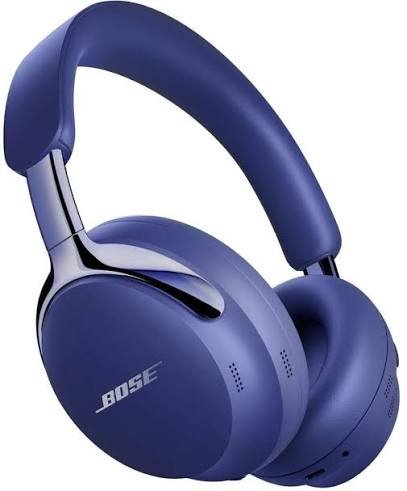
The QC Ultra Gen 2 design is essentially unchanged from the first generation and that’s a deliberate choice by Bose. The slim, oval earcups, polished metal yokes, and plastic-dominated construction have been refined slightly. The headband and yoke connectors now have a shinier, more premium mirror finish, and new color options include the striking Midnight Violet and Desert Gold. Five colorways are available in total.
Build quality is solidly middling primarily plastic with thin metal reinforcement. It won’t feel as substantial as the Sony or Marshall in hand, but in practice it holds up well for daily use.
Comfort
This is where the Bose QC Ultra Gen 2 genuinely earns its “QuietComfort” name. The clamping force is light, the ear cushions are plush, and the weight distribution across the headband is extremely well-managed. Long-term testers consistently rate these among the most comfortable over-ear headphones ever made a pair you can wear throughout an eight-hour workday or an international flight without developing pressure points or fatigue. They’re a real standout here, even against much more expensive competitors.
Sound Quality
The Gen 2 delivers a noticeable step up from the original in terms of sound quality. The tuning leans toward a balanced-yet-engaging signature there’s warmth in the bass and some upper-treble lift for clarity, but nothing overdone. Vocals sit naturally, and the overall presentation is clean and spacious.
For audiophiles, these still won’t match the last drop of detail you get from the Sony or the mid-forward presence of the Marshall Monitor III, but after EQ adjustment via the Bose Music app they can get remarkably close. Spatial audio (“Immersive” mode) has improved significantly, with a new Cinema mode added for movie watching.
Noise Cancellation
The QC Ultra Gen 2 has the best ANC available in any consumer headphone right now. The “ActiveSense” system uses adaptive ANC that automatically adjusts its intensity in response to changing environmental conditions. Low-frequency rumble (aircraft engines, subway cars, road noise) gets virtually eliminated. The system now supports a full off setting as well, which wasn’t available on the original.
Ten microphones handle the combined ANC and call duties, and response time is impressively fast.
Transparency Mode
Bose calls it “Aware” mode, and it’s one of the better implementations in this class. External sound comes through naturally and at appropriate volume levels conversations are audible without sounding overly amplified or artificial. It’s not quite at Apple AirPods Max levels of naturalness, but it’s excellent for a headphone at this price.
Call Quality
With ten microphones working in concert, call quality is strong. Your voice comes through clearly even in moderately noisy environments, and the microphones do a good job of suppressing background noise without making your voice sound processed or distant. Wind noise remains a weak spot for outdoor calls, as it does with most over-ear headphones.
Battery Life
Bose improved battery life from 24 hours (Gen 1) to 30 hours with ANC on a meaningful upgrade. With ANC switched off, you get around 45 hours. Fast charging provides roughly three hours of playback from a 15-minute charge, which is genuinely useful when you’re in a hurry.
Connectivity
Bluetooth 5.3 with aptX Adaptive support handles wireless duties competently, with stable connection and low latency. Multipoint connects to two devices simultaneously. For the first time on the QC Ultra series, USB-C wired lossless audio is supported a practical addition for users who want hi-res playback at home or on compatible devices.
Mobile App and Software
The Bose Music app is clean and fairly intuitive. Key functions include an EQ with multiple presets (and the ability to create a custom curve), ANC intensity slider, Aware mode adjustment, spatial audio settings, and multipoint device management. It’s not as feature-rich as the Sony Headphones Connect app, but everything you need is there.
Real-World Performance
In real-world daily use, the QC Ultra Gen 2 is exceptional. Getting on a commuter train and flicking on ANC is transformative the background noise drops to near-silence in seconds. The comfort means you can wear them essentially all day without noticing. Switching between phone calls and laptop audio via multipoint works seamlessly.
The main limitation is that at $449, you’re paying a premium for primarily the best-in-class ANC and extraordinary comfort. If sound quality is your top priority above all else, you may find the Sony WH-1000XM6 more compelling.
Pros
- Best active noise cancellation available
- Extraordinary all-day comfort
- USB-C wired lossless audio (new for Gen 2)
- Improved spatial audio with new Cinema mode
- 30-hour battery with ANC on (up from 24 hours)
- Strong multipoint connectivity
Cons
- Sound quality, while good, trails the Sony at the same price
- Primarily plastic build doesn’t feel premium for $449
- Controls can feel limited and slightly unintuitive
- ANC can’t be fully turned off manually on some firmware
Best For
Frequent flyers, commuters, anyone who values ANC and all-day wearing comfort above everything else.
Who Should Avoid It
Audiophiles prioritizing last-drop sound quality, or anyone on a budget.
Final Verdict
9.4/10 The Bose QuietComfort Ultra Gen 2 is the most refined noise-cancelling headphone you can buy. Its ANC performance is unmatched, its comfort is unparalleled, and the Gen 2 fixes the main complaints about the original. It’s the best overall recommendation for most people.
2. Sony WH-1000XM6
Overview
Sony’s flagship noise-cancelling headphone line has been a formidable rival to Bose for years, and the WH-1000XM6 released in May 2025 after a three-year gap is the brand’s most ambitious effort yet. Sony redesigned the headphones extensively, bringing back folding hinges (absent from the XM5), redesigning the earcups, adding more microphones, and pushing sound quality further.
The XM6 is the headphone that comes closest to doing everything well.
Key Specifications
| Specification | Details |
|---|---|
| Driver Type | Dynamic, 30mm |
| Bluetooth Version | 5.3 |
| Codec Support | SBC, AAC, LDAC, aptX Adaptive |
| Battery Life (ANC On) | ~30 hours |
| Fast Charge | 3 min = 3 hours; full charge ~3 hrs |
| Weight | ~254g |
| Connectivity | Bluetooth + 3.5mm audio cable |
| Microphones | 8 mics (feedforward + feedback ANC) |
| Foldable | Yes (stainless steel hinges) |
| Multipoint | Yes (2 devices) |
| Price | $449–$460 |
Design and Build Quality
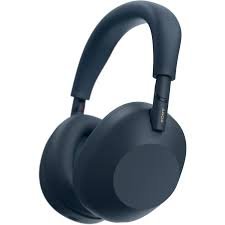
The XM6 went through a significant redesign from the XM5. Folding stainless steel hinges return (they were controversially removed from the XM5), allowing the headphones to collapse into a more compact package. The earcups are now seamless and slightly rounder, and the case features a magnetic clasp rather than a zipper a welcome upgrade. The headband has fewer visible seams and looks more premium.
At 254g, these are extremely lightweight for a flagship headphone. The overall build feels solid and well-constructed.
Comfort
The XM6 is comfortable, though Sony increased the clamping force compared to previous models specifically to improve ANC effectiveness and passive isolation. Some users with narrower heads find this a slight issue over multi-hour listening sessions, while others won’t notice it at all. The earcups don’t produce excessive heat, and the over-ear design accommodates most ear sizes well. Comfort is very good overall just not quite at the Bose QC Ultra’s extraordinary level.
Sound Quality
This is where the XM6 genuinely pulls ahead. The 30mm drivers deliver a bass-forward signature with impressive sub-bass extension, excellent midrange clarity, and well-controlled treble. If you love punchy, dynamic, full-bodied sound, these headphones are intensely satisfying.
The Sony Headphones Connect app includes a comprehensive 10-band EQ, DSEE (Digital Sound Enhancement Engine) for improving compressed audio files, and a customizable sound profile tailored to your individual hearing sensitivity. The result is an extremely flexible sound platform it sounds great out of the box and even better when tuned.
Cinema Mode is a standout feature, delivering convincing spatial audio for movie and TV content.
Noise Cancellation
XM6 ANC is among the very best available, arguably neck-and-neck with the Bose QC Ultra Gen 2. It handles mid-to-high frequency sounds like voices, sirens, and keyboard clatter particularly well an area where some ANC headphones struggle. The automatic ambient detection feature adapts the ANC level based on your surroundings.
Transparency Mode
Sony’s transparency implementation is top-tier. It sounds genuinely natural and allows easy conversation without removing the headphones. The “Speak to Chat” feature automatically pauses playback when you begin talking and resumes when you stop a convenient hands-free option.
Call Quality
Sony has historically led the pack on call quality, and the XM6 continues that tradition. Eight microphones handle voice pickup with precision, and the dedicated AI-based noise reduction filters out background sounds effectively. Test callers consistently describe the call quality as very clear and natural-sounding.
Battery Life
Thirty hours with ANC on is standard in this class. Sony’s rapid charge system delivers an impressive three hours of playback from just three minutes of charging one of the fastest in the category.
Connectivity
LDAC support makes the XM6 a standout for Android audiophiles who want the highest possible wireless audio quality. LDAC supports up to 990kbps nearly three times the bandwidth of standard SBC. Combined with a hi-res capable DAC on a compatible Android device, you can hear a genuine difference compared to standard Bluetooth codecs.
Mobile App and Software
The Sony Headphones Connect app is one of the most feature-complete in the industry. Ten-band parametric EQ, multiple preset sound profiles, DSEE upscaling, custom ANC slider, hearing sensitivity profiling, “Speak to Chat” configuration, Cinema Mode, voice assistant integration, and firmware updates it’s all there. The app interface is clean and easy to navigate.
Real-World Performance
On a daily basis, the XM6 delivers. Sound quality is genuinely impressive for a wireless headphone, ANC handles open-plan offices and commutes with ease, call quality turns heads on video meetings, and the lightweight design means you barely notice you’re wearing them. The folding design makes them practical to carry in a smaller bag.
The one consistent criticism: some users find the clamping force firmer than ideal, and the thin headband doesn’t distribute weight quite as evenly as the Bose design. It won’t bother everyone, but it’s worth trying in-store if possible.
Pros
- Best-in-class sound quality among ANC headphones
- Exceptional call quality with 8 microphones
- Feature-rich Headphones Connect app (10-band EQ, DSEE, Cinema Mode)
- LDAC support for lossless-quality wireless audio
- Fast charge: 3 hours playback from 3 minutes charging
- Improved foldable design with stainless steel hinges
Cons
- Clamping force may be too firm for some users
- No USB-C wired audio (3.5mm only)
- ANC fractionally behind the Bose QC Ultra Gen 2 in very noisy environments
- Battery life (30 hrs ANC on) average for the price
Best For
Music lovers, remote workers who make frequent calls, Android audiophiles who want LDAC wireless audio.
Who Should Avoid It
Users who prioritize maximum comfort over anything else, or Apple-ecosystem-first users (AirPods Max offers tighter iOS integration).
Final Verdict
9.3/10 The Sony WH-1000XM6 is the complete package. It delivers the best sound quality and call performance in this roundup, backed by world-class ANC and a deeply customizable app. If you’re primarily motivated by audio quality, this is your pick.
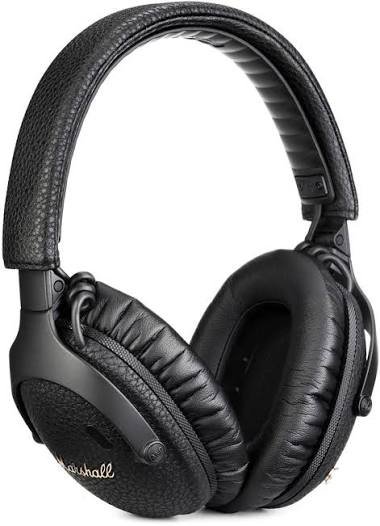
3. Marshall Monitor III ANC
Overview
Marshall is known the world over as the guitar amp company and the Monitor III ANC wears that heritage unapologetically. From the rubberized tactile casing and brass logo emblem to the red-velvet-lined leather carry case shaped like a guitar amp, these headphones have more personality than anything else in this roundup.
But the Monitor III isn’t just style. Underneath the stage-ready aesthetic is a headphone with genuinely impressive performance credentials particularly in battery life and musicality for rock, folk, and acoustic genres.
Key Specifications
| Specification | Details |
|---|---|
| Driver Type | Dynamic (redesigned from scratch for Monitor III) |
| Bluetooth Version | 5.3 |
| Codec Support | SBC, AAC (aptX/LDAC update delayed) |
| Battery Life (ANC On) | ~70 hours |
| Battery Life (ANC Off) | ~100 hours |
| Fast Charge | 15 min = 12 hours playback |
| Weight | ~250g |
| Connectivity | Bluetooth + USB-C to 3.5mm cable |
| Microphones | Dedicated call mics |
| Foldable | Yes (compact fold) |
| Multipoint | Yes |
| Price | $349 |
Design and Build Quality
This is where the Monitor III genuinely stands out in a crowd. The exterior is coated in a tactile rubberized material that mimics the textured grip of a Marshall amp stack. The gold-ringed Marshall logo sits proud on each earcup. Physical buttons (rather than touch controls) give the headphones a purposeful, premium feel that’s increasingly rare as competitors move to gesture-based controls.
The headphones are constructed from recycled aluminum, silicon, and hardwearing plastics. The compact egg-shaped hard carry case with its red velvet lining is a premium inclusion that most competitors can’t match at this price it’s genuinely protective and looks stunning.
At 250g, the Monitor III is extremely comfortable to carry, and the redesigned headband does a good job of distributing weight.
Comfort
Outstanding. The earcup padding is notably soft and plush, the clamping force is well-judged, and the headband has been redesigned from the Monitor II to redistribute weight more evenly. Long-wear testers report comfortable all-day use, with no pressure points even after six to eight hours of continuous wear. The earcup size accommodates most ear shapes without ears touching the driver housing.
Sound Quality
True to Marshall’s amp heritage, the Monitor III is tuned with a focus on musicality rather than clinical accuracy. The midrange guitars, male vocals, acoustic instruments is forward and present without being harsh. There’s warmth in the bass without excess, and the treble is detailed but occasionally shows a hint of sibilance on overly bright recordings.
If you listen primarily to rock, indie, folk, or acoustic music, the Monitor III will sound fantastic right out of the box. The 5-band EQ in the Marshall app is responsive and allows you to tune for electronic genres as well, though it takes some work to get the punch and sub-bass that’s more naturally present in the Sony or Bose.
The monitor-benchmarked drivers deliver solid soundstage width and decent imaging for a closed-back wireless headphone better than average in this regard.
Noise Cancellation
ANC on the Monitor III is described by most reviewers as “above average” but not class-leading. It performs competently for commuting and travel enough to take the edge off engine noise and office chatter but falls behind the Bose and Sony in outright noise reduction. Three ANC modes are available via the Marshall Bluetooth app.
Transparency Mode
Transparency mode functions adequately for quick conversations. It amplifies outside audio noticeably but can sound slightly artificial compared to the Bose and Sony implementations. Practically useful; not particularly transparent-sounding.
Call Quality
Call quality is a positive surprise. The dedicated call microphones handle voice pickup clearly, and background noise rejection is good. Multiple testers and long-term owners report clear, intelligible calls even in moderate background noise.
Battery Life
This is the Monitor III’s most remarkable spec and it’s not even close to the competition. Seventy hours with ANC enabled, and up to 100 hours with ANC off. In practical terms, if you use these for three to four hours daily, you’re charging once every two weeks or so. The 15-minute fast charge delivers 12 hours of playback, which is one of the best quick-charge ratios in the industry.
For any user who finds constant charging annoying, this battery life is genuinely transformative.
Connectivity
Bluetooth 5.3 delivers stable connections and multipoint pairing for two devices. The lack of LDAC or aptX Adaptive at launch was a notable gap (Marshall has discussed future codec updates), but for most users, SBC and AAC at the quality level these headphones produce will be perfectly satisfactory.
Mobile App and Software
The Marshall Bluetooth app covers the basics well: 5-band EQ with presets, ANC mode selection, customizable M-Button (can be mapped to Spotify Tap, voice assistant, or EQ shortcuts), Soundstage feature for wider immersive audio, and firmware update support.
The app is clean but less feature-dense than the Sony or Bose equivalents. Notably, the individual EQ adjustments can’t currently be saved as named preset you’ll need to reset them each time.
Real-World Performance
Wearing the Marshall Monitor III in public generates compliments. People notice them. Beyond aesthetics, daily performance is excellent for music listening and call quality, with the extraordinary battery life meaning you’ll rarely be caught searching for a cable.
ANC limitations become most apparent on long flights or in very noisy open offices, where the Bose or Sony pull clearly ahead. But for everyday commuting, working from home with mild background noise, and music listening, the Monitor III more than holds its own.
Pros
- Best battery life in class (70 hours ANC on, 100 hours ANC off)
- Stunning design with tactile quality and premium carry case
- Excellent comfort for all-day wear
- Musicality tuned for rock, indie, acoustic
- Great call quality
- Satisfying physical controls (no unreliable touch panels)
Cons
- ANC trails the Bose and Sony by a meaningful margin
- No LDAC or aptX Adaptive support (yet)
- EQ presets can’t be saved as named custom profiles
- Transparency mode sounds somewhat artificial
- At $349, it sits at the higher end of the mid-premium range
Best For
Music lovers (especially rock and acoustic genres), anyone who wants distinctive style, frequent travelers who hate charging, musicians, and content creators.
Who Should Avoid It
Anyone prioritizing best-in-class ANC, pure audiophile performance, or Android high-res wireless audio via LDAC.
Final Verdict
8.8/10 The Marshall Monitor III ANC is the headphone for people who want character with their performance. Its battery life is unmatched, its comfort is exceptional, its design is beautiful, and it sounds excellent for the music genres it was designed around. The ANC isn’t at the top of the class, but everything else is competitive or leading.
4. Soundcore Space One Pro
Overview
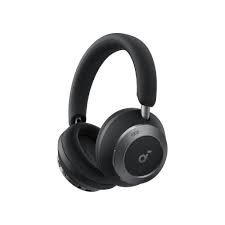
Anker’s Soundcore brand built its reputation on extremely budget-friendly audio gear, so the Space One Pro priced at $199 represents a deliberate move upmarket. And it largely succeeds. The Space One Pro offers a compelling mid-range option with genuinely premium features: LDAC support, 55+ hours of battery life, strong ANC, and a remarkable FlexiCurve folding design that collapses the headphones to half their deployed size.
For buyers who find $400-plus headphones hard to justify but still want a capable, well-featured pair, the Space One Pro offers a lot per dollar.
Key Specifications
| Specification | Details |
|---|---|
| Driver Type | Triple composite diaphragm dynamic |
| Bluetooth Version | 5.3 |
| Codec Support | SBC, AAC, LDAC |
| Battery Life (ANC On) | ~55 hours |
| Fast Charge | 5 min = 4 hours playback |
| Weight | ~260g |
| Connectivity | Bluetooth + 3.5mm audio cable |
| Microphones | Multiple (ANC + call) |
| Foldable | Yes (FlexiCurve three hinge points, folds 50% smaller) |
| Multipoint | Yes |
| Price | $199 |
Design and Build Quality
The Space One Pro’s design is restrained and functional rather than distinctive. Matte plastic body, minimal branding, thick padded earcups, and a generously padded headband with leather-like coating. It looks clean and modern but won’t attract attention the way the Marshall does.
The FlexiCurve structure is genuinely impressive the earcups swivel 180 degrees and fold flat via three hinge points, creating a package roughly half the size of the headphones deployed. In a backpack or carry-on, this is very practical.
All-plastic construction means it doesn’t feel as premium as the Bose or Sony in hand, though it’s sturdier than the price might suggest.
Comfort
Very comfortable for most users. The plush earcups create a good acoustic seal, the headband padding is generous, and clamping force is moderate. Some users with smaller heads report the fit feeling slightly loose this headphone was designed for a range of head sizes, and the largest adjustment setting may not clamp firmly enough for smaller heads.
Heat buildup after extended wearing has been noted by multiple reviewers; this is common with larger, sealed earcups.
Sound Quality
The default tuning on the Space One Pro is bass-forward noticeably so. If you enjoy punchy EDM, hip-hop, or pop, this is enjoyable. If you prefer more balanced or neutral sound, you’ll need to dial back the low end via the companion app.
The good news is the Soundcore app offers an extensive EQ system with numerous presets and a custom option, making the Space One Pro quite flexible. With the right EQ setting, the sound opens up considerably and handles vocal-driven music and acoustic content much better. Treble lacks the last degree of airiness compared to the Bose or Sony, but for $199 the overall sonic performance is strong.
LDAC support over Android enables noticeably better wireless audio quality when using a compatible source.
Noise Cancellation
The Space One Pro advertises up to 45dB noise reduction with its 4-stage adaptive ANC. Real-world performance is quite good competitive with ANC headphones at the $250–$300 price point. It handles low-frequency engine and road noise effectively and substantially reduces office background noise. It doesn’t quite reach the level of the Bose or Sony flagships, but the gap is smaller than you’d expect given the $250 price difference.
Transparency Mode
The ambient sound mode (Soundcore’s version of transparency) is functional but varies in quality. Standard ambient mode lets in a reasonable amount of external sound for situational awareness. Some reviewers note it can sound slightly hollow compared to the Bose or Sony implementations.
Call Quality
Call quality is adequate clear in quiet environments, though microphone performance in noisy settings doesn’t match the flagships. For occasional calls and video meetings, it works well; for power users who spend several hours a day on calls, the Sony or Bose will serve better.
Battery Life
Fifty-five hours with ANC on is exceptional at any price, let alone $199. In practice, most users can go well over a week between charges with moderate daily use. The five-minute fast charge delivering four hours of playback adds practical convenience for rushed mornings.
Connectivity
LDAC support alongside Bluetooth 5.3 makes this genuinely appealing for Android audiophiles on a mid-range budget. Multipoint pairing handles two simultaneous connections. The 3.5mm cable is included for wired passive listening.
Mobile App and Software
The Soundcore app is feature-rich and well-designed. An extensive library of EQ presets (some reviewers describe it as potentially overwhelming), a custom EQ editor, ANC intensity settings, ambient mode controls, and a dedicated bass boost function are all included. The UI is intuitive on both Android and iOS.
Real-World Performance
Day to day, the Space One Pro impresses in the areas that matter most at this price: battery life, comfort, and ANC effectiveness. Sound quality is enjoyable especially after EQ adjustment, and LDAC brings genuine wireless audio quality improvements for Android users.
The main real-world caveat is the loose fit for smaller heads and the over-bassy default tuning that requires app customization to tame. It also lacks the premium feel that the Bose, Sony, or Marshall deliver.
Pros
- Exceptional battery life (~55 hours ANC on)
- LDAC support at a mid-range price point
- Impressive FlexiCurve folding design (very compact)
- Strong ANC for the price
- Feature-rich companion app
- Great value at $199
Cons
- Default sound profile is overly bass-heavy
- May fit loosely on smaller heads
- Build quality doesn’t feel premium
- Transparency mode is average
- Call quality trails the flagships
Best For
Budget-conscious buyers who want LDAC, long battery life, and competent ANC. Great for Android users who want an upgrade from budget headphones without paying flagship prices.
Who Should Avoid It
Anyone with a smaller head, users who prioritize premium build quality or the best call quality, or those who want a neutral sound without needing to fiddle with EQ.
Final Verdict
8.5/10 At $199, the Soundcore Space One Pro punches well above its weight class. The battery life, LDAC support, and ANC effectiveness are all genuinely impressive for the price. Just be prepared to spend some time with the EQ.
5. JLab JBuds Lux ANC
Overview
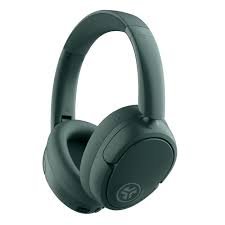
At $79 and frequently on sale for less the JLab JBuds Lux ANC is a remarkable value proposition. JLab has built its brand on affordable, accessible audio gear, and the JBuds Lux is the brand’s most ambitious over-ear headphone to date. For buyers on a tight budget who still want ANC, a companion app, and multi-device Bluetooth connectivity, this delivers features that would have cost several hundred dollars just a few years ago.
Managing expectations is important here. This is a budget headphone, and it performs accordingly in some areas. But for the right buyer, it’s a genuinely smart purchase.
Key Specifications
| Specification | Details |
|---|---|
| Driver Size | 40mm dynamic |
| Bluetooth Version | 5.3 |
| Codec Support | SBC, AAC |
| Battery Life (ANC On) | ~40 hours |
| Battery Life (ANC Off) | ~70 hours |
| Fast Charge | 10 min = 7.5 hours playback |
| Weight | ~235g |
| Connectivity | Bluetooth + USB-C cable |
| ANC Reduction | ~35dB |
| Foldable | Yes |
| Multipoint | Yes (Bluetooth Multipoint) |
| Price | $79 (often $49–$59 on sale) |
Design and Build Quality
The JBuds Lux looks more premium than its $79 price tag suggests, which is a deliberate design choice by JLab. The matte-finished plastic shell is clean and modern, available in four colorways (graphite black, cloud white, sage green, and mauve) plus limited-edition Transformers variants. The hinged yokes allow the headphones to fold flat for storage.
What you won’t get at this price: a hard-shell carry case (only a charging cable is included), premium materials, or the refined build quality of the Bose or Marshall. The plastic can feel slightly cheap in hand on close inspection, and the ear cushion material has a slightly synthetic smell initially.
Comfort
Comfortable enough for typical listening sessions the Cloud Foam earcups are soft and the clamping force is moderate. The earcups are on the shallower side, which may cause ears to press against the inner housing for listeners with larger ears. The headband padding is adequate but not generous.
During extended sessions (four hours or more), some users report the earcups running warmer than premium models.
Sound Quality
The JBuds Lux has a warm, bass-focused signature with upper bass emphasis. It’s an engaging, fun-sounding headphone for casual listening pop, hip-hop, and EDM fare particularly well. The mids are slightly recessed and treble lacks definition compared to more expensive options, but for everyday casual listening it’s more than acceptable.
The JLab app provides EQ adjustment with three preset profiles (Signature, Balanced, Bass Boost) plus a 10-band custom curve. Dialing in a flatter response via the custom EQ improves vocal clarity noticeably.
Noise Cancellation
ANC claims up to 35dB reduction, and real-world performance is decent for a budget headphone. It handles consistent low-frequency noise like airplane engines and road rumble reasonably well in standard ANC mode. Don’t expect the ANC to silence a loud café or office completely this is budget-class performance but for commuting or casual travel it provides a meaningful improvement over no ANC at all.
Transparency Mode
The “Be Aware” mode is functional but amplifies everything ambient sounds come through loudly and somewhat indiscriminately. In quiet environments it works for quick conversations. In noisy environments, it amplifies everything rather than selectively letting in voices.
Call Quality
Pleasantly good for the price. The microphone provides clear voice transmission in quiet environments, and the ENC (environmental noise cancellation) filters out most consistent background noise. Wind noise causes issues outdoors, as it does with most headphones at this price.
Battery Life
One of the JBuds Lux’s strongest selling points is its 70-hour battery life without ANC (40 hours with ANC on). For a $79 headphone, this is genuinely impressive you’ll be charging these once a week or less with typical use. The 10-minute fast charge delivering 7.5 hours of playback is also notably good.
Connectivity
Bluetooth 5.3 with multipoint connectivity for two simultaneous devices is solid. The unique “Share Mode” allows a second pair of JBuds Lux headphones to wirelessly connect to the primary pair and receive the same audio a fun sharing feature not seen at this price. USB-C audio provides a wired connection option.
Mobile App and Software
The JLab app covers the basics: EQ adjustment (10-band custom + 3 presets), ANC and Be Aware intensity sliders, film mode, firmware updates, and button customization (including 3-tap function assignment). Volume limiting to 85dB or 95dB for safe hearing is a thoughtful inclusion.
Real-World Performance
For the money, the JBuds Lux ANC delivers genuinely useful performance. Commuters and students who want ANC at a fraction of flagship prices will find a lot to like here. Sound quality is good enough for casual listening, ANC takes the edge off noisy environments, and the battery life is remarkable.
The experience falls short of the premium headphones in several areas build feel, sound detail, ANC depth, and transparency mode quality but at $79 (and frequently less), those gaps are completely understandable.
Pros
- Exceptional value at $79
- Impressive 70-hour battery (40+ hours with ANC)
- Bluetooth Multipoint and “Share Mode” (audio sharing with second pair)
- Effective ANC for the price
- Fast charge: 10 min = 7.5 hours
- Good build for the price point
Cons
- Sound quality lacks detail in mids and treble
- No carry case included
- Transparency mode amplifies everything indiscriminately
- Shallow earcups may not suit larger ears
- No LDAC support
- ANC can’t completely match the premium segment
Best For
Budget-conscious buyers, students, teenagers, secondary travel headphones, first-time ANC headphone owners.
Who Should Avoid It
Anyone prioritizing sound quality, call quality, or premium build and materials.
Final Verdict
7.8/10 At $79, the JLab JBuds Lux ANC is the best budget wireless ANC headphone you can buy. Its limitations are real but entirely proportionate to the price. If you need capable wireless headphones without spending more than $100, this is where to start.
Headphones Comparison Table
| Feature | Bose QC Ultra Gen 2 | Sony WH-1000XM6 | Marshall Monitor III | Soundcore Space One Pro | JLab JBuds Lux |
|---|---|---|---|---|---|
| Sound Quality | ★★★★½ | ★★★★★ | ★★★★ | ★★★★ | ★★★ |
| Comfort | ★★★★★ | ★★★★ | ★★★★½ | ★★★★ | ★★★½ |
| ANC | ★★★★★ | ★★★★★ | ★★★½ | ★★★★ | ★★★ |
| Battery Life | ★★★½ | ★★★½ | ★★★★★ | ★★★★★ | ★★★★ |
| Microphone / Calls | ★★★★ | ★★★★★ | ★★★★ | ★★★½ | ★★★ |
| Build Quality | ★★★½ | ★★★★ | ★★★★½ | ★★★½ | ★★★ |
| Features / App | ★★★★ | ★★★★★ | ★★★½ | ★★★★ | ★★★½ |
| Portability | ★★★★ | ★★★★½ | ★★★★ | ★★★★★ | ★★★★ |
| Value for Money | ★★★½ | ★★★½ | ★★★★ | ★★★★★ | ★★★★★ |
| Overall Rating | 9.4/10 | 9.3/10 | 8.8/10 | 8.5/10 | 7.8/10 |
Which Headphones Should You Buy?
Still not sure which pair is right for you? Here’s a breakdown by specific use case.
Best Overall: Bose QuietComfort Ultra Gen 2
For most people those who commute, travel occasionally, and want the best noise cancellation available the Bose QC Ultra Gen 2 is the clear winner. Its ANC is genuinely remarkable, its comfort will let you wear it all day without fatigue, and the Gen 2 fixes the main issues of the original. It’s the closest thing to a universal recommendation in this roundup.
Best Premium Sound: Sony WH-1000XM6
If your primary motivation is how music sounds and you want a headphone that does everything exceptionally well the Sony WH-1000XM6 is your pick. Its LDAC support, 10-band EQ, Cinema Mode, and outstanding call quality make it the most feature-complete option in the roundup. The small clamping force caveat aside, it’s close to flawless.
Best Budget: JLab JBuds Lux ANC
At $79, the JBuds Lux ANC offers active noise cancellation, 70-hour battery, multipoint Bluetooth, and a companion app at a price that’s hard to argue with. It won’t compete with the flagship headphones, but for first-time ANC headphone buyers or anyone on a strict budget, it’s the obvious starting point.
Best for Music Lovers: Marshall Monitor III ANC
The Monitor III was tuned with musicians in mind. Its midrange-forward, instrument-focused sound profile is the most natural-sounding option in this roundup for acoustic music, rock, indie, and singer-songwriter content. Pair that with its extraordinary 70-hour battery life and beautiful build quality, and it’s the top pick for anyone who primarily listens to music.
Best for Travel: Bose QuietComfort Ultra Gen 2
For long-haul travel, the combination of best-in-class ANC and extraordinary all-day comfort makes the Bose QC Ultra Gen 2 the headphone you want on an international flight. The new Cinema mode enhances movie watching mid-flight, and USB-C wired audio means compatibility with airplane entertainment systems.
Best for Office Use: Sony WH-1000XM6
Remote and in-office workers benefit most from the Sony XM6’s exceptional call quality (eight microphones, AI noise reduction), the highly customizable Speak-to-Chat feature that automatically pauses music when you speak, and its effective ANC that blocks open-plan office noise.
Best Battery Life: Marshall Monitor III ANC
Seventy hours with ANC on, 100 hours without. Nothing else comes close in this roundup.
Best Comfort: Bose QuietComfort Ultra Gen 2
Multiple long-term reviewers consistently rank the Bose QC Ultra as the most comfortable over-ear headphones available. The combination of light clamping force, memory foam-like cushioning, and excellent weight distribution makes it genuinely forgettable on your head which is the highest compliment in comfort terms.
Best Noise Cancellation: Bose QuietComfort Ultra Gen 2
Close race with the Sony, but the Bose edges ahead consistently in the deepest ANC tests, particularly for low-frequency noise like aircraft engines and underground trains.
Best Value for Money: Soundcore Space One Pro
At $199, the Space One Pro delivers LDAC wireless audio, 55+ hours of battery life, strong ANC, and a feature-rich app. Compared to what you’d pay for equivalent performance a few years ago, it’s genuinely impressive. It earns the value award even against the $79 JLab, because the step up in performance is proportionally larger than the price difference.
Headphone Care and Maintenance Tips
A good pair of headphones is an investment. Here’s how to keep yours performing well for years.
Cleaning ear cushions Use a slightly damp microfiber cloth to gently wipe down the earcup surfaces. Avoid soaking the material or using harsh cleaning products. For memory foam cushions, a dry cloth works better. Clean monthly for daily users.
Safe storage Always return headphones to their carry case when not in use. Leaving them loose in a bag exposes the earcups and headband to scratches, impacts, and accidental damage. If your headphones didn’t come with a case, a generic padded headphone pouch is a worthwhile $15 addition.
Battery care Lithium-ion batteries degrade faster when consistently charged to 100% or discharged to 0%. Many companion apps now offer a “Battery Health” mode that charges to around 80% to extend long-term battery capacity. Use it if it’s available.
Firmware updates Keep firmware up to date via the companion app. Updates often bring improved ANC performance, new features, and bug fixes. It’s genuinely worth checking every month or two.
Protecting the headband Avoid leaving headphones in hot cars or exposed to direct sunlight for extended periods. Heat degrades plastic and glue adhesives in headband padding. Store in a cool, dry place.
Replacing ear pads After 12–18 months of heavy use, earcup padding typically begins to degrade, crack, or flatten. Most major brands sell replacement pads it’s a worthwhile maintenance investment that can extend headphone life significantly for a fraction of replacement cost.
Travel tips Use the carry case whenever traveling. Avoid packing headphones in checked luggage if possible. The pressure changes during flights don’t harm headphones, but physical impact from baggage handling does. Consider a separate TSA-friendly bag compartment to avoid the headphones being crushed under heavy items.
Frequently Asked Questions
Are expensive headphones worth it?
For most daily users, yes. The gap in ANC performance, sound quality, comfort, and durability between a $79 budget pair and a $350–$450 flagship is substantial and tangible. That said, the Soundcore Space One Pro at $199 demonstrates that diminishing returns kick in somewhere you don’t need to spend $450 to get a genuinely excellent pair.
What are the best headphones for everyday use?
The Bose QuietComfort Ultra Gen 2 is the best everyday pair for most users its combination of exceptional comfort, best-in-class ANC, and solid sound quality makes it genuinely pleasant to use all day. For a more affordable everyday option, the Soundcore Space One Pro delivers very well at $199.
Do wireless headphones sound as good as wired?
In most everyday listening scenarios, a modern wireless headphone with LDAC or aptX Adaptive codec support is indistinguishable from wired for most listeners. The Sony WH-1000XM6 with LDAC over a compatible Android device, for example, approaches hi-res audio quality wirelessly. However, dedicated audiophile wired headphones with a quality DAC/amp still edge out the best wireless options at identical price points.
How long do Bluetooth headphones last?
Build quality matters, but most well-maintained wireless headphones last three to five years of daily use. The battery typically degrades before the electronics by year three, most lithium-ion batteries retain around 70–80% of original capacity. Replacing ear pads and keeping firmware updated can significantly extend the useful life of a premium pair.
Can I replace ear pads on these headphones?
Yes, for all five models in this roundup, replacement ear pads are available either directly from the manufacturer or through third-party suppliers. The Marshall Monitor III uses a twist-and-lock mechanism for easy pad replacement. Bose and Sony sell genuine replacement pads through their websites.
Which headphones are best for traveling?
The Bose QuietComfort Ultra Gen 2 is the top pick for travel. Its best-in-class ANC handles aircraft engine noise exceptionally well, the comfort holds up over 10+ hour flights, the Cinema mode enhances in-flight entertainment, and the compact folding design fits neatly into carry-on bags.
Are the Sony WH-1000XM6 better than the Bose QuietComfort Ultra Gen 2?
It depends on your priorities. The Sony edges ahead in sound quality, call quality, and app features. The Bose leads in ANC effectiveness and comfort. Both are world-class headphones at the same price your choice comes down to what matters most to you.
What Bluetooth codec should I look for?
For iPhone users: AAC is the best available codec; any headphone that supports AAC will deliver good wireless audio quality with iOS devices. For Android users: LDAC (supported by Sony and (Soundcore Space One Pro) or aptX Adaptive (supported by the Bose QC Ultra Gen 2) allow near-lossless wireless audio. If you have a high-res streaming subscription and a quality Android phone, LDAC is worth prioritizing.
What does ANC feel like, and is it uncomfortable?
Good modern ANC is almost imperceptible to most users you’ll just notice that the world gets quieter. Some first-time ANC users report a slight pressure sensation when activating ANC in certain environments, particularly with lower-cost implementations. The Bose QC Ultra Gen 2 is widely regarded as having the most comfortable, pressure-free ANC experience of any headphone.
How do I improve headphone battery life?
Lower the volume to a moderate level rather than maximum, disable ANC when you don’t need it (passive isolation is often enough in quiet environments), enable battery health mode if your app supports it, avoid leaving headphones on and connected when not in use, and store them in a cool place rather than a hot car.
Are these headphones suitable for gaming?
The Sony WH-1000XM6 and Bose QC Ultra Gen 2 both perform well for casual PC or console gaming over Bluetooth, with low enough latency for story games and non-competitive play. For competitive gaming where milliseconds of latency matter, a dedicated gaming headset with a USB dongle for lower-latency wireless (or a wired connection) is a better choice.
Can I use these headphones while exercising?
None of the five headphones in this roundup carry an IP water-resistance rating, which is standard for premium over-ear headphones. They can handle light perspiration from casual exercise or a commute, but shouldn’t be worn in heavy rain, during intense sweat sessions, or at the gym. For exercise, consider a dedicated pair of sport earbuds.
What is transparency mode and do I need it?
Transparency mode uses external microphones to feed amplified outside audio through the headphones, letting you hear conversations, announcements, or surrounding traffic without removing the headphones. It’s genuinely useful for commuters (hearing train announcements), runners (traffic awareness), and office workers (catching quick conversations without full headphone removal). The Bose and Sony implementations are the most natural-sounding in this roundup.
Is the Marshall Monitor III only for rock fans?
The Monitor III is tuned with rock and acoustic genres in mind, and excels in those areas. But with EQ adjustment via the Marshall app, it handles pop, jazz, and even electronic music well. The midrange focus that suits guitars and vocals doesn’t preclude enjoyment of other genres it just means dedicated bass-music fans might prefer the Sony’s more aggressive low-end signature.
Do any of these headphones work without the app?
Yes. All five headphones work perfectly as Bluetooth headphones out of the box without the companion app installed. The apps add EQ customization, ANC fine-tuning, button configuration, and firmware updates all valuable extras but they’re not required for basic use.
Which headphones have the best microphone for calls?
The Sony WH-1000XM6 leads the category with eight dedicated microphones and AI-based noise reduction. The Bose QC Ultra Gen 2 (ten microphones) is a close second. The Marshall Monitor III performs well above what its price might suggest. The Soundcore Space One Pro and JLab JBuds Lux are adequate for occasional calls but don’t match the flagship microphone quality.
Final Verdict
After spending time with all five headphones across commuting, remote work, travel, and extended listening sessions, here’s where each one lands.
The Bose QuietComfort Ultra Gen 2 ($449) earns the top recommendation for most buyers. No other headphone in 2026 matches its combination of best-in-class ANC, extraordinary all-day comfort, and the full-featured Gen 2 improvements more battery, wired USB-C audio, and Cinema mode. If you spend significant time in noisy environments or travel regularly, this is the pair to get.
The Sony WH-1000XM6 ($449) is the headphone for audio enthusiasts and professionals who demand the most from their sound quality and call performance. Its deeper feature set, LDAC support, and outstanding microphone array make it the complete package and genuinely the better-sounding headphone of the two flagships.
The Marshall Monitor III ANC ($349) is the surprise of the roundup. It’s the most distinctive-looking headphone here by a mile, its battery life is absurdly long, its comfort is exceptional, and it sounds wonderful for the music genres it was designed around. At $349, it offers strong value against the $449 flagships especially for music-first buyers.
The Soundcore Space One Pro ($199) makes an impressive case for the mid-range. LDAC support, 55-hour battery, and capable ANC at half the flagship price is a genuinely compelling proposition. It’s the right pick for buyers who want to upgrade from truly budget audio without committing to flagship pricing.
And the JLab JBuds Lux ANC ($79) proves that you don’t need to spend a lot to get meaningful noise cancellation, multipoint Bluetooth, and a companion app. Its limitations are real, but at this price point, its strengths are remarkable.
Whatever your budget or use case, there’s a headphone in this roundup that will serve you well. The most important thing is choosing the one that matches how you actually listen and then turning up the volume.